Source anti aging organic face serum and gel cream set for Face, Home Use, Skin Care Treatments
Find and compare 30 listings for anti aging organic face serum and gel cream set from verified Chinese manufacturers. Buyers can evaluate customization options, certifications like CE and FDA, and pricing for face, home use, and skin care treatments applications.
Key considerations
Products List






Comprehensive Sourcing Guide
Strategic Sourcing Guide for Anti-Aging Organic Face Serum and Gel Cream Sets
Navigating the global market for anti-aging organic face serum and gel cream sets requires a disciplined approach that balances cosmetic efficacy with rigorous supply chain verification. Buyers seeking these specific product categories must understand that "organic" and "anti-aging" are marketing terms that must be substantiated by verifiable supply chain data, ingredient transparency, and compliance with international safety standards. The following guide outlines the critical technical, regulatory, and operational factors necessary for a successful procurement strategy, drawing exclusively on observed market data and established industry practices.
Technical Specifications and Formulation Standards
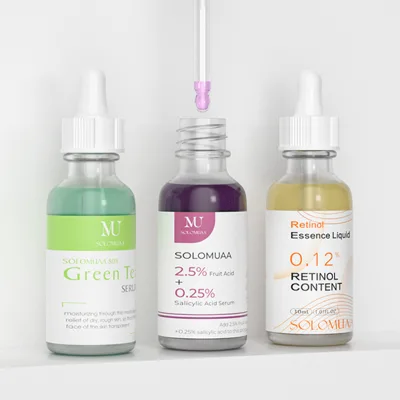
The technical foundation of any successful anti-aging set lies in the precise formulation of active ingredients and the physical properties of the vehicle. In the current market, products marketed for anti-aging, firming, and skin revitalization typically rely on a combination of humectants, emollients, and bioactive compounds. Observed product specifications indicate that effective formulations often contain ingredients such as Hyaluronic acid, Vitamin E, Collagen, and Retinol. These components are selected for their ability to address specific skin concerns including fine lines, loss of elasticity, and dehydration.
When evaluating a potential product, buyers must verify the specific concentration and source of these actives. For instance, while some listings highlight Aloe Vera, Dead Sea Salt, Glycerin, Green Tea, Pearl, and Shea Butter as main ingredients, others focus on Hyaluronic acid and Retinol. The distinction is critical because the efficacy of Retinol, in particular, is highly dependent on stability and delivery systems, which vary significantly between manufacturers. Furthermore, the physical form of the product—whether a serum, gel cream, or standard cream—determines the absorption rate and user experience. Specifications often cite a volume of 50g or custom requirements, with packaging dimensions such as 27.4x27.4x32.2 cm for single packages, which directly impacts logistics planning.
Buyers should also scrutinize the "Single Gross Weight" and "Net Weight" data provided by suppliers. A discrepancy between these figures can indicate packaging inefficiencies or potential quality control issues. For example, a net weight of 55ml paired with a gross weight of 0.668 kg suggests a specific packaging density that must be accounted for in freight calculations. Additionally, the "Shelf Life" is a vital technical parameter; observed data suggests a standard shelf life of 3 Years, but this must be validated against the specific preservative system used in the formulation to ensure stability during transit and storage.
Compliance and Certification Verification
In the cosmetics industry, compliance is not merely a legal requirement but a fundamental trust signal for B2B buyers. The market for anti-aging products is heavily regulated, particularly regarding claims of efficacy and safety. When sourcing from regions like Guangdong, China, buyers must insist on a comprehensive suite of certifications. Observed product data lists several critical certifications, including CE, FDA, GMP, MSDS, GMPC, and ISO.
It is essential to understand the distinction between these certifications. GMP (Good Manufacturing Practice) and GMPC (Good Manufacturing Practice for Cosmetics) indicate that the manufacturing facility adheres to strict hygiene and process controls. ISO certification, often paired with GMPC, validates the quality management system of the supplier. The presence of MSDS (Material Safety Data Sheet) is non-negotiable for international shipping, as it details the chemical composition and safety handling requirements for hazardous materials, which may include certain preservatives or active ingredients like Retinol.
Furthermore, the FDA and CE markings indicate compliance with regulatory frameworks in the United States and the European Union, respectively. However, buyers must verify that these certifications are current and specific to the manufacturing site, not just the brand. The "Standard" field in product listings often notes "customized," which implies that the product may not adhere to a universal standard but rather a specific agreement between the buyer and the supplier. In such cases, the buyer must define the required standard explicitly in the contract to ensure the final product meets the destination market's legal requirements.
Cost Drivers and Pricing Dynamics
Understanding the cost structure of anti-aging organic face serum and gel cream sets is vital for budgeting and margin analysis. The observed price range in the market spans from $0.71 to $27.00 USD, a variance that reflects differences in ingredient quality, packaging sophistication, and order volume. The primary cost drivers include the source and purity of active ingredients like Retinol and Hyaluronic acid, which are significantly more expensive than basic moisturizers.
The Minimum Order Quantity (MOQ) is another critical factor influencing unit cost. Data indicates an MOQ range from 2 to 10,000 units. High MOQs, such as 10,000 units, often correlate with lower per-unit costs but require significant capital investment and storage capacity. Conversely, lower MOQs offer flexibility for testing the market but result in higher unit prices. Buyers must calculate the total landed cost, which includes the product price, shipping, insurance, and import duties. The "Trade Term" options, including EXW, FOB, CIF, CFR, DAP, and DDP, dictate who bears the risk and cost of transportation. For example, an EXW (Ex Works) price is the lowest but requires the buyer to manage all logistics, whereas DDP (Delivered Duty Paid) offers a higher price but transfers all logistical risks to the supplier.
Typical Applications and Target Demographics
The application of these products is highly specific, targeting distinct consumer needs and demographics. The primary application is "Face" care, with a focus on "Skin Care Treatments" for home use. The target audience is predominantly female, with specific attention to "All Skin Type" and "Normal" skin types. However, the functional claims extend to addressing complex issues such as acne treatment, dark circles, firming, and lightening.
The "Feature" list for these products is extensive, including Anti-Aging, Anti-Wrinkle, Nourishing, and Skin Revitalizer properties. This broad spectrum of claims requires careful marketing alignment to avoid regulatory scrutiny. For instance, a product claiming "Acne Treatment" must be formulated differently than one focused solely on "Anti-Wrinkle." The "Time Used" attribute, often listed as "Day," suggests that some formulations are designed for daytime use, potentially requiring non-greasy textures suitable for makeup application. Conversely, "Day & Night" sets imply a dual-formulation strategy, where the night cream may contain higher concentrations of active ingredients like Retinol, which can be photosensitive.
Supplier Evaluation and Customization Capabilities
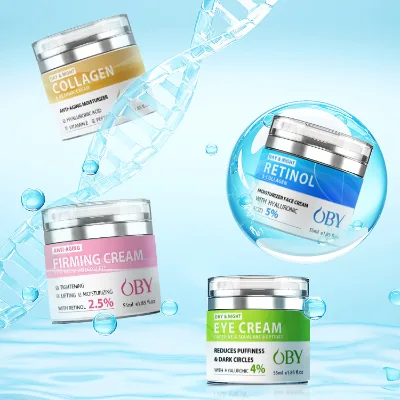
Selecting the right supplier involves more than just price comparison; it requires an assessment of their customization capabilities and service model. The market data indicates that "Customization" is widely available, with options for "Customized" logos and "Private Label" services. This allows buyers to create a unique brand identity without the need for in-house manufacturing. The "Brand" attribute often shows "OEM" or specific brand names like "OBY," indicating the supplier's willingness to operate under the buyer's brand or their own.
Buyers should evaluate the supplier's ability to handle "OEM ODM Private Label" services. This includes the capacity to modify formulas, adjust packaging designs, and meet specific volume requirements. The "Service" attribute confirms that suppliers are prepared to offer these tailored solutions. Additionally, the "Sample Time" of "Within One Week" is a crucial metric for evaluating supplier responsiveness. A quick turnaround on samples allows for faster product testing and market validation.
When evaluating suppliers, buyers must also consider the "Production Time," which ranges from 7 to 30 days. This timeline must be factored into the overall supply chain schedule to ensure timely delivery. The "Delivery Time" of about 20 to 30 days further highlights the need for precise planning. Buyers should verify the supplier's track record in meeting these timelines consistently, as delays can disrupt inventory levels and sales cycles.
Quality Control and Long-Term Procurement Considerations
Ensuring consistent quality is paramount in the cosmetics industry, where consumer trust is fragile. Quality control measures should be embedded throughout the procurement process, from raw material sourcing to final packaging. The "Standard" being "customized" means that the buyer must define the quality parameters explicitly, including acceptable ranges for viscosity, pH, and microbial counts. Regular third-party testing is recommended to verify that the product meets the claimed specifications and safety standards.
Long-term procurement considerations involve building a resilient supply chain. Buyers should assess the supplier's capacity to scale production and their ability to maintain quality during volume increases. The "Shipment" options, including Express, Air Freight, and Sea Freight, offer flexibility but also introduce variability in lead times and costs. For large orders, Sea Freight is often the most cost-effective, while Express is suitable for urgent restocking.
Finally, buyers must consider the "Payment" terms, which typically include Paypal, Western Union, and T/T. Establishing clear payment terms can mitigate financial risk and ensure a smooth transaction. By adhering to these guidelines and maintaining a focus on verified data, buyers can successfully source high-quality anti-aging organic face serum and gel cream sets that meet both market demands and regulatory requirements.
Comparative Analysis of Product Attributes
To facilitate decision-making, the following table summarizes key attributes observed in the market for anti-aging face care sets. This comparison highlights the variability in specifications and helps buyers identify products that align with their specific procurement needs.
| Attribute Category | Observed Variations | Strategic Implication |
|---|---|---|
| Main Ingredients | Aloe Vera, Dead Sea Salt, Hyaluronic Acid, Retinol, Collagen | Verify ingredient purity and concentration for efficacy claims. |
| Certifications | CE, FDA, GMP, MSDS, GMPC, ISO | Ensure certifications match destination market regulations. |
| MOQ Range | 2 to 10,000 units | Balance inventory risk with unit cost efficiency. |
| Production Time | 7 to 30 Days | Plan production schedules to avoid stockouts. |
| Shelf Life | 3 Years | Assess storage requirements and expiration date management. |
| Packaging | Carton, 50g or Custom Volume | Optimize packaging for shipping efficiency and brand appeal. |
| Target Skin Type | All Skin Type, Normal | Align product claims with the specific needs of the target demographic. |
| Function | Anti-Aging, Moisturizing, Firming, Whitening | Ensure functional claims are supported by formulation and testing. |
By systematically analyzing these attributes, buyers can make informed decisions that minimize risk and maximize the potential for success in the competitive anti-aging skincare market. The integration of technical rigor with strategic supplier evaluation ensures a robust procurement process that delivers value and quality to end consumers.
FAQs
What certifications do anti aging organic face serum and gel cream set suppliers provide?
Suppliers typically provide CE, FDA, GMP, MSDS, GMPC, and ISO certifications. These documents verify compliance with international safety standards and manufacturing hygiene, ensuring the product meets regulatory requirements for export to major markets like the US and EU.
How long is the production time for these custom skin care sets?
The production time ranges from 7 to 30 days depending on order volume and customization needs. Buyers should account for an additional 20 to 30 days for delivery time after production is completed to ensure timely arrival at their destination.
Can I customize the logo and packaging for this anti aging organic face serum and gel cream set?
Yes, customization is available for logos and packaging to create a unique brand identity. Suppliers offer OEM and private label services, allowing buyers to specify product names, volumes like 50g, and carton packaging details to match their market strategy.
What are the main ingredients found in these anti aging organic face serum and gel cream sets?
Common ingredients include Hyaluronic acid, Vitamin E, Collagen, Retinol, Aloe Vera, and Shea Butter. These components are selected for their anti-aging, moisturizing, and firming properties, though specific formulations vary by manufacturer and target skin type.
What is the minimum order quantity for sourcing these skin care products?
The minimum order quantity ranges from 2 to 10,000 units depending on the supplier and product specifications. Higher volumes often secure lower unit prices, while lower MOQs allow for market testing with reduced financial risk for new buyers.
Which shipping methods are available for delivering these face cream sets?
Available shipping methods include Express, Air Freight, and Sea Freight to accommodate different urgency and budget needs. Buyers can select trade terms like EXW, FOB, or DDP to determine who manages logistics and bears the cost of transportation.